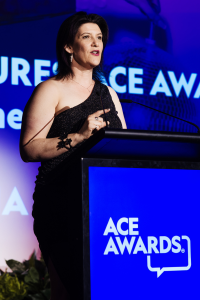
 Tania Hyde is known for her visionary leadership in sustainability, circular economy adoption and climate resilience within the infrastructure sector. Technical Director and Circular Design Lead at Beca, with over 25 years’ experience, she has championed systems-based, future-focused approaches to infrastructure delivery in Aotearoa New Zealand, Australia and the Pacific.
Winner of the ACE New Zealand 2025 Futurespace Award, Tania used her prize earlier this year to complete a Living Labs training course through the European Network of Living Labs (ENoLL), strengthening her knowledge about these open-innovation ecosystems to support the infrastructure sector in delivering more effective, long-term and resilient outcomes for people, communities and the environment.
We asked Tania about the value of Living Labs and how she hopes to apply her learnings in New Zealand.
What are Living Labs?
ENoLL defines Living Labs as “user-centred, open innovation ecosystems based on a systematic user co-creation approach, integrating research and innovation processes in real-life communities and settings”. This structured real-life environment, which can be temporary or permanent, physical or virtual, brings together a diverse group of end-users and engages them as co-creators to design, trial and refine responses to complex challenges over time. As Tania explains, staying with a challenge is important as some impacts only become visible once a solution is tested in real life when people use it, maintain it, adapt it or reject it.
The rules of engagement are established from the outset, removing the constraints that can arise around risk and intellectual property to create a safe and open space for experimentation, innovation and shared learning.
“Living Labs offer a space where different stakeholders and organisations come together in a structured way to solve the really complex challenges we’re grappling with. It’s a system piece, not just an individual project. They’re often described as place-based solutions – developing a solution in the communities that are impacted by that particular challenge.”
Why do we need them?
Many of the challenges facing infrastructure, communities and the environment are no longer problems that can be solved by technical expertise alone. They sit across systems: spanning areas like policy, funding, behaviour, governance, maintenance, equity, climate risk and community trust. Yet too often, by the time these challenges reach the infrastructure sector, the problem has already been narrowed and the solution pathway is already partly defined.
Living Labs create a way to step back from that narrow project frame. They bring together communities, researchers, decision-makers, industry and end users in real-life settings to understand the challenge more fully, co-create responses, test them in context, and learn from what actually happens before solutions are scaled.
Tania saw firsthand the potential of a Living Lab approach at the 2025 Adaptation Futures conference in Ōtautahi Christchurch, where she led a pop-up indigenous Living Lab focused on behaviour change for climate action. “We had amazing feedback and it got me thinking about how we can use this and get that learning long term rather than from one-offs.”
“For me, the value of a Living Lab is that it gives you a structured way to stay with complexity. It isn’t about one organisation arriving with the answer. It’s about creating the conditions for the right people to shape the response together, then testing that response in the real world so you can see what works, what doesn’t, and what unintended consequences emerge.”
Learnings gained
Motivated to deepen her understanding about how these dynamic, collaborative environments operate, Tania saw the ENoLL course as an opportunity to learn more about the model’s structure, and what it might look like in Aotearoa.
The training explored different engagement methods for Living Labs, which vary depending on the challenge, the place and the people involved. But for Tania, one of the strongest learnings was that Living Labs aren’t just about engagement methods or bringing people into a room. They are about creating the conditions for collaboration to continue over time.
That means being intentional about who is involved, when they are involved, how decisions are made, how power is shared, how learning is captured, and how the work continues beyond the first conversation. “The course reinforced for me that meaningful change doesn’t come from arriving with the answer. It comes from creating conditions where the right people can shape, test and adapt the response together. Collaboration does not happen just because people are in the same room, you need a structure that supports it.”
The importance of testing innovation in context was also reinforced. Living Labs provide a way to trial ideas in real-life settings, where the practical, social, environmental and operational consequences can be better understood before solutions are scaled. Take the example of using renewable technologies in the Pacific: solar panels may solve an immediate energy problem, but without maintenance, ownership and end-of-life planning, they can create a different kind of environmental burden that lasts for decades.
“For me, that is where real-life testing matters. A solution can look sustainable on paper, but once it’s placed into a community, supply chain, maintenance system or policy setting, different issues can emerge. Living Labs help expose those unintended consequences early, so we don’t scale the wrong thing.”
Where does New Zealand sit on the Living Lab journey?
New Zealand has strong technical capability, but the way complex infrastructure and sustainability challenges are framed can make it difficult to work differently. “I think technically New Zealand is strong, but often by the time problems come to the infrastructure sector, they’re already defined. The challenge has been narrowed, the project has been shaped, and the solution pathway is already partly set. That makes it much harder to step back and ask whether we are solving the right problem in the first place.”
In Europe, you often hear the term “transition brokers” or “orchestrators of change” within Living Lab and transition processes. Rather than arriving as technical experts with predefined answers, they play a role in helping clients, communities, researchers, industry and other stakeholders work through uncertainty together.
“That’s where I think consultants can play a really useful role. Not as the person with the predefined solution, but as someone who can help convene, translate and connect across the system. It’s not just facilitation; it’s helping hold the system together long enough for the right people to define the problem, test responses, learn from what happens and adapt the approach over time.”
For Tania, this represents an important opportunity for New Zealand. Many of the country’s future infrastructure challenges will require deeper collaboration across organisations, disciplines and communities, particularly where climate resilience, circular economy, equity and long-term asset performance intersect.
“We are still often working in a lowest-price environment, where anything that looks sustainable, circular or different can be treated as an add-on or a frill. But if we’re designing long-term assets for a changing climate and a changing world, that thinking can’t sit at the edge of the project. It has to be part of how we define value from the beginning.”
A homegrown Living Lab
Following Tania’s work at the Adaptation Futures conference, clients expressed interest in using a pop-up Living Lab approach for specific challenges, and the course has strengthened her confidence that the model can work here, provided it is tailored for local contexts. “For me, that means recognising Te Ao Māori, mana whenua relationships, place-based knowledge and the responsibilities that come with working in real communities. A Living Lab has to be shaped by the place it sits within. In Aotearoa, that means the model needs to reflect our relationships, governance settings and obligations, not just the technical challenge we are trying to solve.”
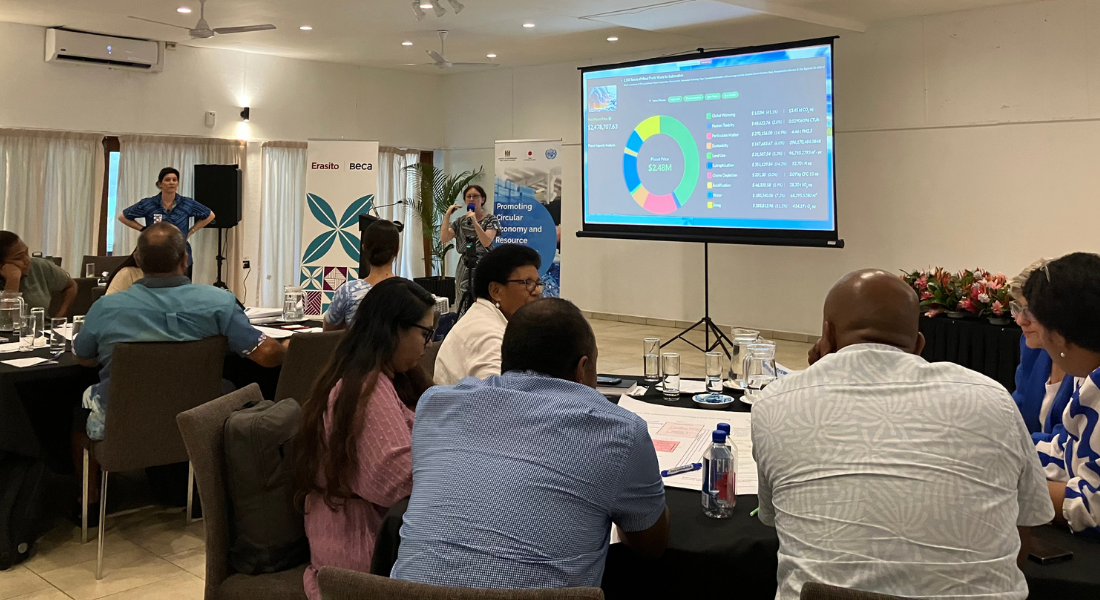
Tania also sees strong potential for Living Labs to support complex transition challenges across the Pacific, particularly where circular economy, infrastructure, behaviour change, policy and community outcomes intersect. “We’re doing some work in the Pacific looking at a circular transition away from plastics and what that looks like. If you want to change the system, you need a way to test and trial different interventions, then learn what happens when you change parts of that system. That is where a Living Lab approach becomes powerful.”
With Beca’s support, Tania is now exploring the establishment of a Living Lab in New Zealand, in collaboration with Waipapa Taumata Rau, University of Auckland and a broader group of potential foundational partners. The intent is to create a structured, place-based environment where partners can work with communities, researchers, industry and decision-makers to test responses to complex challenges in real-life settings, learn from what happens, and build more effective long-term outcomes.