ACE’s six engagement principles for consultants and clients are more than a set of good intentions. They are practical behaviours that shape how people make decisions, manage pressure, respond to change and deliver great outcomes that communities rely on.
Technical excellence alone is rarely enough to carry a project through complexity. The real difference often lies in the quality of the relationship – whether people trust each other enough to be honest early, challenge constructively, share risk fairly and stay focused on the outcome rather than retreating behind process.
We spoke with Kushla Tapper – Department of Conservation Strategic Assets Manager – about the power of good collaboration and strong working relationships between clients, consultants and contractors.
Drawing on her vast experience in the roading space at Hurunui, Waitaki and Southland District Councils, Kushla describes good engagement as “relationship contracting”. The contract matters, but it should not be the first place people turn when something gets hard. If it is constantly being pulled off the shelf, the relationship is already under strain. The aim is not to ignore the contract, but to create a working environment where people can solve problems before they become disputes.
Engage with integrity and respect
Integrity and respect begin with recognising that everyone in the project has pressures, constraints and expertise. The client has budget, governance and public accountability pressures. The consultant has professional obligations and commercial realities. The contractor has programme, labour, supply chain and risk pressures. The people on the ground have local knowledge that can make or break a solution.
In practice, this can be as simple as turning up to site, talking to the crew, listening before deciding and acknowledging the value of the people doing the mahi. As a district council roading manager, Kushla fondly recalls rural site visits, connecting with crew members and building enough trust that staff felt able to raise ideas with her. She emphasises how small human gestures – taking ice blocks to crews on hot days, thanking the cyclic truck crew whose work shapes how the community experiences the road network – are not soft extras. They build trust, enabling better information to flow.
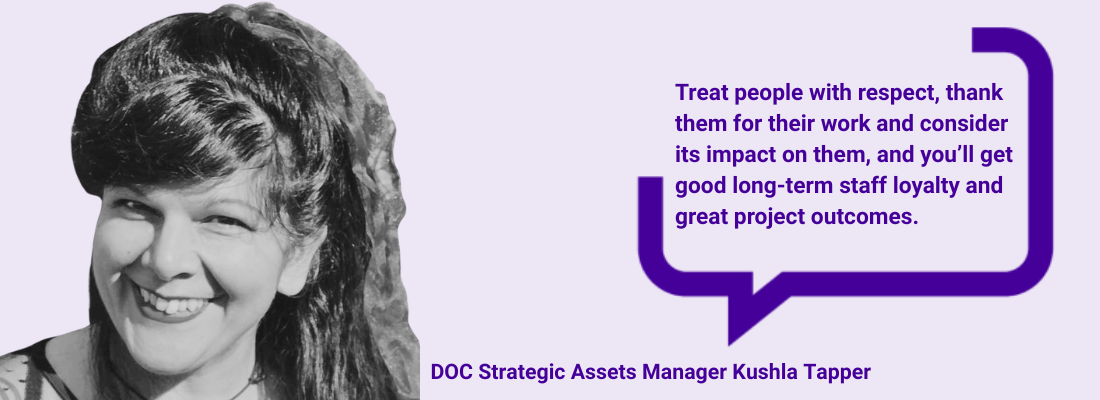
“If [the cyclic crew] really cares about the community, they have the biggest impact on how the council is seen, how people feel about using our roads and how safely they drive on them, and many other outcomes. Treat people with respect, thank them for their work and consider its impact on them, and you’ll get good long-term staff loyalty and great project outcomes.”
People who feel respected are more likely to speak up, stay engaged, share ideas and take pride in the outcome.
Ensure strong governance, leadership and decision-making
Strong relationships still need structure. Good governance makes it clear who can decide what, when decisions need to be made and how issues will be escalated.
Build governance and decision-making into the programme from the outset. Map who needs what information, who has authority, and what happens when scope, cost or timing pressures emerge.
The human side of governance is also about putting the right people in the right roles. Some people thrive in technical problem-solving but struggle in relationship-heavy roles. Others are skilled at bringing people together. Recognising this early, and supporting people accordingly, can prevent conflict and reduce the cost of poor engagement.
Expect change and plan for it
Change is inevitable. The difference between a healthy project and a strained one is often whether change has been anticipated and discussed before it arrives.
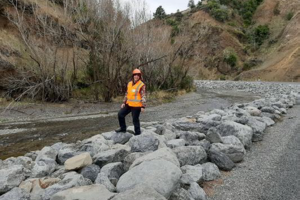
Following the Kaikōura earthquake in 2016, the need to reopen and repair roads required people to think beyond standard responses. Working for the Hurunui District Council at the time, Kushla describes one roading example in which the team considered the local context rather than defaulting to the usual engineering solution for a slip. By asking what materials were available on site, who had equipment nearby, how the road was used, what landowners needed and the environmental impacts that required managing, waste material was reused, the road was narrowed safely to one lane with good visibility, and permanent posts were installed to suit the rural setting.
This approach did not remove risk or process. It managed both through conversation, judgement and a shared understanding of the outcome. Planning for change means creating agreed ways to assess impact, approve variations, document decisions and keep people informed.
Clarify purpose and outcomes
A clear purpose helps teams make better decisions when the path is not straightforward.
In Kushla’s Hurunui roading example, it shifted the conversation from “What do the standards say?” to “What are we trying to achieve, and what is the most appropriate way to get there?” The outcome was not simply to apply a standard detail. It was to restore access, keep people safe, use public money wisely, reduce environmental impact and support the community. Those outcomes created space for right-sized solutions.
Test the purpose early and often by asking what success looks like for the client. How is the client measured? What does the community need from this project? What would a good outcome look like for those building, maintaining and using the asset?
When the purpose is clear, teams can make trade-offs honestly and avoid solving the wrong problem well.
Balance risk while creating space for innovation
Kushla says innovation is often blocked by fear of getting it wrong, stepping outside the usual approach or being penalised for trying something different. Yet New Zealand cannot afford to gold plate every solution or rely on standard responses when local context demands better judgement.
Balancing risk and innovation means creating a safe way to test ideas. It involves assessing the risks of different approaches, the evidence that supports decisions, the long-term cost or saving, and who needs to be involved before proceeding.
In the roading example, using local material and right-sizing the solution helped reduce waste, manage cost and deliver a practical result. The contractor was also able to think commercially – if the approach reduced unnecessary work-in-progress costs and supported profitability, it created room to invest in and retain good staff, who contribute good ideas because they feel valued.
The benefit is not innovation for its own sake. It is better outcomes for all parties, greater value and a stronger sense of shared ownership.
Communicate transparently
Transparent communication is the thread that holds the other principles together. It may include being open about budgets, constraints, risks, uncertainty and decisions, and involve sharing information early enough for others to act on it.
Kushla speaks of the benefit of being upfront with contractors about the full budget, including contingencies. When contractors understand the whole picture, she says they can use their knowledge to help find smarter ways to deliver within the available funding. Transparency builds trust because people are not left guessing what is hidden or why decisions are being made.
Transparent communication also matters beyond the project team. Communities notice what is happening around them. The person fixing potholes, driving the cyclic truck or speaking with a landowner may be the most visible representative of the whole project. How they are supported affects not only delivery, but public confidence.
Bringing it back to people
The engagement principles are linked by a common thread: people. Projects are delivered by people – people under pressure, people with expertise, people trying to do their best work, and people who need clarity, trust and respect to make good decisions.
Treat the principles not as a poster on the wall, but as daily practice. Ask better questions. Listen earlier. Make decision pathways clear. Engage respectfully. Talk about change before conflict arises. Share information openly. Create space for innovation. The principles are a reminder that strong relationships, systems and processes sit at the heart of achieving great outcomes.
Find out more about ACE’s six engagement principles for consultants and clients
ACE is embarking on a campaign to drive better consultant and client relationships and engagement practices to improve collaboration, efficiencies, and the management of risks, with the goal of improving productivity, time and cost efficiency, outcomes and positive impacts on the economy, society and the environment.
The kaupapa is clear: how can we use our influence to collectively build a more cost-effective and high-performing infrastructure system for Aotearoa?