
ACE New Zealand Chief Executive Helen Davidson says the real driver of infrastructure costs isn’t the investment in engineering advice – it’s the quality of the decisions that shape a project long before construction begins.
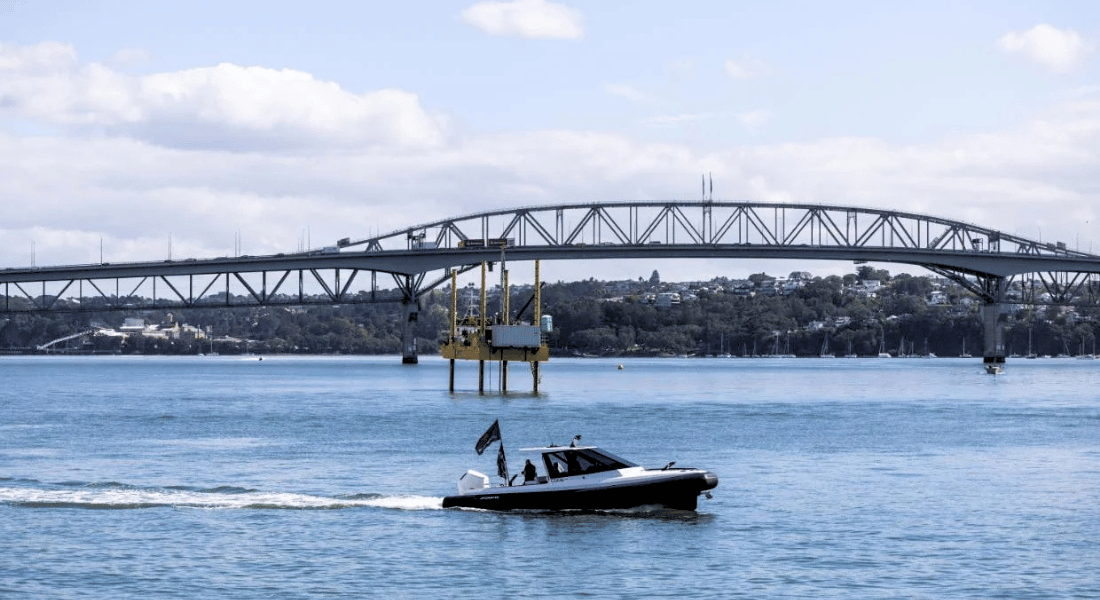
The announcement on Auckland’s second Waitematā Harbour Crossing highlights a reality that applies to every major infrastructure project in Aotearoa – the bigger the project, the more important the decisions that shape it.
The Government says the crossing is likely to be the largest and most expensive infrastructure project ever undertaken in this country and has signalled that more work is needed.
Yes, there’s already been $106 million spent on consultants and contractors investigating whether a bridge or a tunnel would work best from an engineering and transport connectivity point of view. But the challenge now is to establish what it would cost, how it would be funded, when it could be built and how it would be delivered, before settling on a preferred solution. That’s sensible.
Because when billions of dollars are at stake, the real challenge isn’t simply how much infrastructure costs. It’s how well we make decisions about what we build, when we build it, and how we deliver it to achieve enduring value for generations to come.
Yet whenever major infrastructure projects enter the public spotlight, a familiar narrative emerges: consultants and engineers must be driving the cost. It’s an easy assumption to make. But it misunderstands where infrastructure costs come from, and the role technical experts actually play. Engineering consulting is typically one of the smallest components of an infrastructure budget. Design and engineering services generally account for only a small, single-digit percentage of the total cost of major projects.
The bulk of expenditure sits elsewhere. Construction, materials, land acquisition, financing, and consenting requirements account for the vast majority of project costs and have a far greater impact on affordability than the cost of engineering advice.
That doesn’t mean engineering expertise is unimportant – quite the opposite.
The decisions made during planning and design influence almost every dollar spent thereafter. That’s why project owners use engineering consultants in the first place. Their role is not to set project budgets or decide what government can afford. Their role is to help clients understand options, assess risks, evaluate trade-offs and make informed decisions.
The proposed harbour crossing is a good example.
A project of this scale involves countless choices. How much capacity is needed? What level of resilience is appropriate? What risks are acceptable? How should costs today be balanced against benefits that may be realised decades into the future? These early decisions can determine costs for decades to come.
New Zealand First’s Shane Jones recently said engineers need to work with what we’ve got, not what they want to build, but these are not engineering decisions alone. They’re decisions that belong to governments, infrastructure agencies and project owners, informed by technical expertise.
Public discussion often treats engineering consultants as though they control project budgets. But they influence decisions, not budgets. They work within the constraints they are given and help clients understand the consequences of different choices.
Research commissioned by ACE New Zealand and undertaken by the New Zealand Institute of Economic Research reinforces this point.
The research found that for every dollar invested in engineering consulting for infrastructure, New Zealand receives approximately $2.10 in value. It estimated a net benefit to the country of around $3.3 billion annually through improved infrastructure outcomes. It also found organisations avoid approximately $1.9 billion in annual costs by accessing specialist expertise through consultants rather than maintaining equivalent capability permanently in-house.
Those findings challenge the idea that engineering consultants simply add cost to projects. Instead, they suggest their value lies in helping clients avoid poor decisions, identify better solutions and reduce long-term costs.
Of course, engineers are not immune from scrutiny. Like every part of the infrastructure system, they have a responsibility to provide practical advice and deliver value.
But blaming engineers for rising infrastructure costs oversimplifies a far more complex picture.
Engineers don’t design in a vacuum. With every project you have to balance competing priorities including cost, safety, resilience, environmental outcomes and long-term performance. And these trade-offs are shaped by the collective decisions of many participants: clients, consultants, contractors, financiers, regulators, communities and elected representatives. No single group controls the outcome.
If New Zealand wants better infrastructure outcomes, the focus should be on stronger decision-making across the system. That means better investment and business cases, right-sized procurement practices, clearer risk allocation, earlier collaboration, greater standardisation where appropriate, and more transparent conversations about trade-offs.
It also means recognising that cutting spending on planning, design and technical expertise can be a false economy.
Saving money at the front end of a project may reduce a budget line today, but it can increase costs later through redesign, delays, unforeseen risks or avoidable operational expenses. Good decisions require good information, and good information requires expertise.
As New Zealand considers the future of the second Waitematā Harbour Crossing, there’s an opportunity to elevate the conversation.
The important question is not whether consultants and engineers cost money. Of course they do. The more important question is whether the decisions being made by all involved will deliver the greatest long-term value for New Zealanders.
Because the evidence suggests the real driver of infrastructure costs isn’t the investment in engineering advice. It’s the quality of the decisions that shape a project long before construction begins.
This opinion piece was first published in the Sunday Star-Times on 30 August 2026.