Are you ready to embrace the changes that accompany Artificial Intelligence (AI) applications? Are you upskilling and reskilling your staff to avoid being left behind? AI is already impacting our industries heightening the need for companies to start preparing now for a future with AI.
Digital technologies can aid efficiency and help organisations navigate the significant disruptions experienced in our industry in recent years, including skills gaps, cost increases and sustainability challenges. It is essential to welcome digital adoption if you are to have a place in a more advanced and productive industry.
The State of Digital Adoption in the Construction Industry 2024 report shows skills and financing are the biggest barriers to digital adoption. But businesses that invest in new technologies are reporting strong returns, with the use of an additional technology associated with higher revenue and profit growth, and more projects delivered on time and under budget.
We spoke to Tonkin + Taylor Group Managing Director Tim Fisher following his attendance at the the FIDIC (International Federation of Consulting Engineers) Global Leadership Forum (GLF) Summit in Geneva earlier this year. He said that, by 2030, it is estimated 30% of hours worked today will be automated by AI. Read Tim’s comments here.
In September, the FIDIC GLF published a paper about How artificial intelligence can unlock a new future for infrastructure following the emergence of a recurring theme about how we can use technology and AI to supercharge progress, reduce waste, and improve project delivery.
Consult Australia has also just published its Enabling Digital by Default white paper, which presents a practical, industry-informed roadmap to seamlessly integrate digital practices across the infrastructure sector.
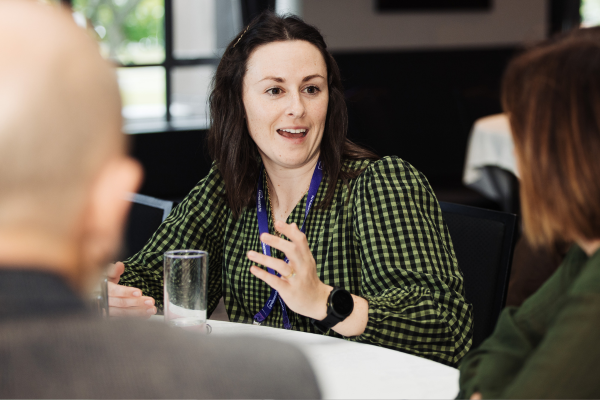
At the 2024 Futurespace workshop, we asked attendees to explore how businesses can integrate digital technologies like AI and automation to streamline operations and enhance customer experiences, and the impact of generative AI on job roles.
 Marketing and winning work
- Enhanced targeting: use AI to identify qualified projects and target specific skills and experiences, streamlining marketing efforts and improving project alignment.
Globalisation and privacy
- Global talent: leverage AI to identify international talent while ensuring compliance with privacy regulations, balancing globalisation with data protection.
Risk management and security
- Human element: combine AI risk management strategies with maintaining the human element in processes to address concerns about technology taking over.
Earlier this year, we asked Politecnica Partner Engineer – Head of International Business Development Enea Sermasi about how his company is approaching AI. The Italian engineering and architecture consulting firm has been exploring AI applications while simultaneously preparing for the European Union’s new AI legislation – the Artificial Intelligence Act.
Enea says: “As with all innovative tools, the answers rest in the balance between use and abuse. AI evolves much faster than any previous technology and abusive practices occur much earlier. The EU is promptly intervening to address AI abuses and testing new software to detect the origin of texts and proposals. However, it’s apparent that no regulatory limit can really mitigate AI abuse. The only way to keep AI under reasonable control is by continuing to use some of our traditional, old human intelligence.”
Customer engagement and insurance
- Early involvement: engage clients early in the process to enhance engagement and address insurance concerns related to AI-generated responses.
We spoke with Aon Head of Enterprise Risk Solutions Sam Ketley about managing AI risk. He says that while the productivity gains of generative AI are easily recognisable, organisations should take great care and conduct regular risk assessments as they embrace this new world. He suggests they work with their insurance broker, technology experts, lawyers, and consultants to set policies and establish a governance framework aligning with regulatory requirements and industry standards.
Read the full article here, including suggestions of components to include in a governance framework.
Job roles and governance
- Governance and security: ensure AI handles tasks like report writing with proper governance and accountability measures to secure job roles.
AECOM Global Artificial Intelligence Lead and Futurespace keynote speaker Tim Wark says knowledge or professional services organisations, such as architecture and engineering consultancies, have many commonalities. He says we’re seeing the next stage of the democratisation of knowledge and that many things we do today will become increasingly automated.
Data and future products
- Data-driven insights: emphasise the importance of data in AI applications and discuss future AI-driven products, such as client dashboards.
Tim Wark says we’re moving towards a much more data-centric sector, which is focused on the value gained from data over the life cycle of a project, and that this will change the way programs and big projects are managed, as well as the design of the underpinning assets.
“We’ve been starting to automate the design life cycle for a while but we’re now becoming aware of data insights that you can get over the entire life cycle of a project, such as those that help with planning, forecasting and asset management. Many organisations still have very time and materials-based contracting models. I think we’ll see a shift to more lump sum, value-based contracting and that large organisations will use this as an opportunity to think about how they manage data and become a data-first organisation.”
AI merits and human oversight
- Human oversight: highlight AI’s capabilities and limitations, ensuring human oversight in tasks like report writing to maintain quality and accuracy.
Workforce and creativity
- Support creativity: take the workforce along on the digital transformation journey, ensuring AI supports rather than replaces creativity.
Tim Wark says organisations will become more relational and strategic and “go on the journey with their clients – the outcome they want to achieve and how they bring about that big picture and detailed view, rather than just a transactional relationship at various points of the project lifecycle.”
He says we’ll likely experience a shift to more advisory, strategic-type roles around the relationships that design consultants have with their end clients. “It is exciting when looked at through this lens. I think we’re at the wave of a new ability to be creative and productive and we encourage everyone to think about what their future job will look like rather than protect and hold what they do now. At the end of the day, these AI models are learning from humans’ creativity and thinking. Computers can now read and write, which means they can learn alongside us, but they’re still learning from us all the time.”
Read the full interview with Tim here.
Verification and accountability
- Checks and balances: develop tools for verifying AI outputs and maintaining accountability in business processes.
Sustainability
- Carbon footprint management: use AI to manage and reduce carbon footprints in projects, integrating these efforts into broader sustainability initiatives.