Kāinga Ora, the government agency providing social housing for New Zealanders in need, has significantly transformed its housing delivery model, moving to a highly collaborative, efficient, cost-effective, and scalable system.
The Housing Delivery System (HDS) showcases the ACE New Zealand Engagement Principles for Consultants and Clients from a client’s perspective within a complex, multi-stakeholder environment. General Manager – Housing Delivery Group – Caroline McDowall says contracting partners were instrumental in developing this new delivery model with Kāinga Ora.
We spoke with Caroline about the importance of relationships and communication, values alignment, confronting change, risk management, and overcoming challenges.
Engaging relationally with integrity and respect
To drive better outcomes under the new model, the agency recognised it needed to improve the way it purchased supply chain services. It undertook internal upskilling, focusing on developing commercial acumen and better understanding the intricacies of design and construction, enabling it to engage as an equal with consultants and contractors and bring “good mana and commerciality to the table”.
Respectful engagement was essential during the transformation and is a key feature of the new model in which contracting partners are encouraged to challenge the status quo. A team for sharing and assessing ideas was established with priority placed on implementing the most impactful ideas.
Clarifying purpose and outcomes
The Kāinga Ora vision is “Building better, brighter homes, communities and lives” – they are doing their part to help ensure every New Zealander has a place to call home. Development of the new delivery model involved a massive co-design shifting from a linear, siloed process to a collaborative environment in which all consultants involved in the design phase work together in mini business units. Occupying a shared space, they focus exclusively on up to 20 Kāinga Ora projects at once, akin to a manufacturing system. Visible and planned workflow management minimises delay and encourages real-time problem-solving.
A shared alignment of values and vision with contracting partners is key to the model’s success and Caroline says the consultants who’ve brought into the Kāinga Ora ethos of high performance and continuous improvement, working together as one team to eliminate wasted time and rework, have flourished in this environment.
“They’re focused on cost efficiency and understand what we are striving for, and they bring their own ideas to the table. Thinking about things differently means throwing out the old rule book and unlearning often quite deeply held beliefs. You need to let go of these to adopt a new tech-enabled way of working.”
Ensure strong governance, leadership and decision-making
Performance expectations under the new model were explicit from the outset, with clear standards ensuring that advice and solutions are right-sized. All parties are accountable, with the focus on delivering value.
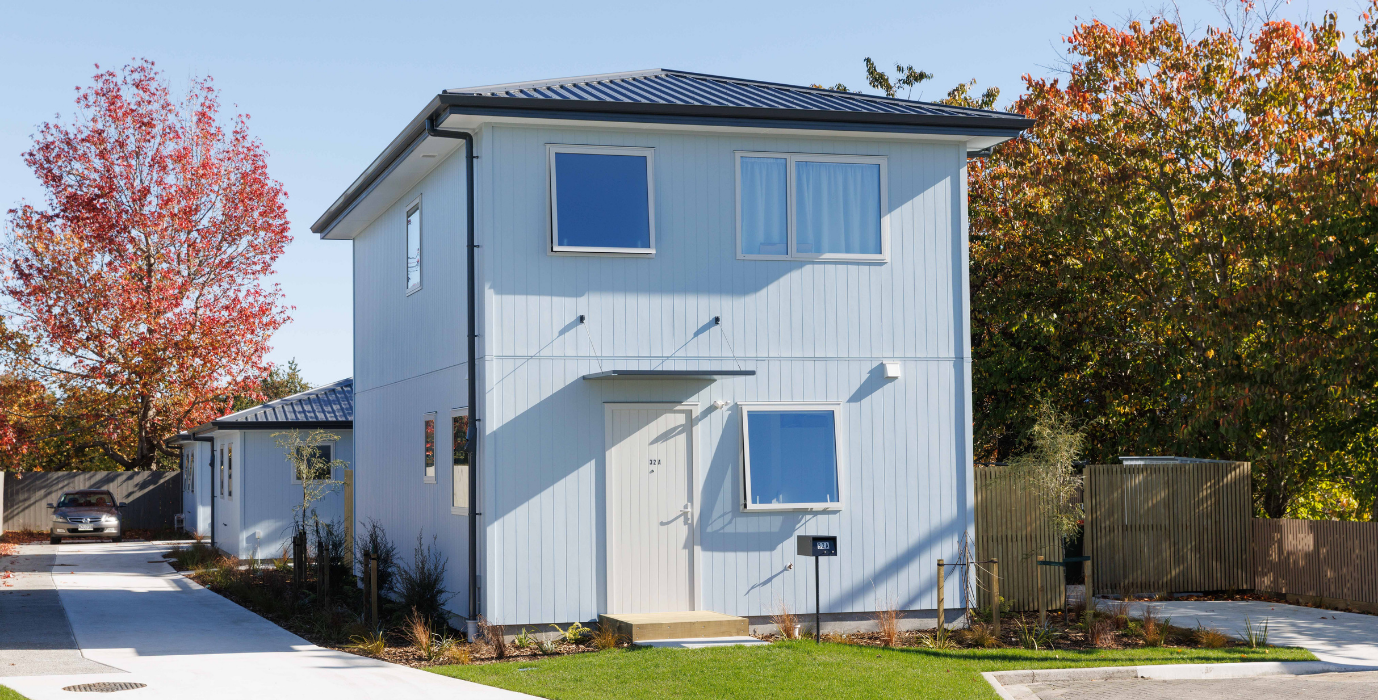
Kāinga Ora contracts the required skillset and operates multi-year contracts. It currently runs three teams – one in Christchurch and two in Auckland – and each has their own set of consultants that run a whole programme of work.
“We pull two to three projects a week into the system, so it’s a continuous flow of activity and then they drop off the conveyor belt at the other end and get lodged with our building consent authority. It’s very simple yet quite different from how the sector typically operates.
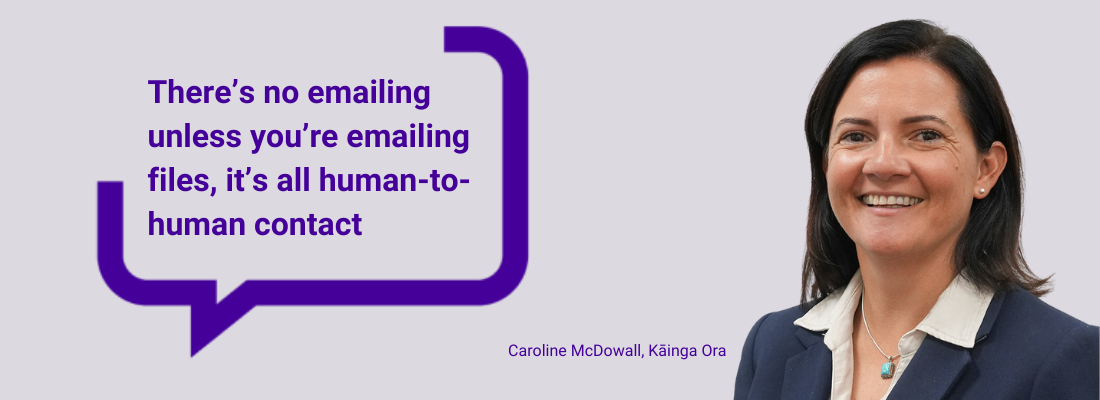
“There’s no emailing unless you’re emailing files; it’s all human-to-human contact. The teams meet daily to discuss the day’s tasks, needs, and how they’ll resource any delays so they can keep to the timeframe.”
Balancing risk while creating the conditions for innovation
Caroline was brought in to lead the new process when the HDS became part of BAU at Kāinga Ora. Her immediate focus was to stabilise operations, and she says getting it to this stage has been challenging.
“Those involved were very understanding of the journey we went on because there’s no playbook for this. We were adapting to the market and the political cycles that we sit within.”
Expect change and plan for it
Open-mindedness and flexibility were essential as processes changed and developed during the co-design. “Don’t assume that because you’ve always done something one way, it’s the most useful way for the downstream person in the value chain,” says Caroline.
Planning and sequencing tasks of the build timeframe were prioritised and Caroline describes contractors’ reactions when asked how quickly they could complete tasks if allocated all the subtrades needed. “Some longer standing builders have gone from questioning our method to endorsing it because they’re now building three times faster than previously and banking their profit faster. They’re just contracting with the market in a different way.”
Prioritising cost efficiency also culminated in further changes to traditional processes with the standardising of housing design plans necessitating fewer architects thereby reducing costs as well as improving process consistency.

Communicating transparently
Transparent communication during the establishment phase of the co-design ensured all parties appreciated the inevitable degree of uncertainty involved while Kāinga Ora determined how to stabilise the workflow.
The agency was open about this initial unpredictability and the rationale behind decisions. Having achieved stability with the bigger interventions that drive efficiency, Caroline says it’s now focused on incremental changes and improvements.
“We’re always thinking about the whole life cost of an asset – what’s the most cost-effective thing to do when you need to maintain this house for 50 years. This might mean greater upfront cost in pursuit of reducing the maintenance needed over the life of the asset.”
Conclusion
The HDS at Kāinga Ora is a compelling example of bringing the Engagement Principles to life in a complex, high-stakes environment. By focusing on internal upskilling, values alignment, expectations, collaboration, risk and change management, and open communication, the agency has successfully co-designed a housing delivery model that provides value for clients, consultants, and the communities it serves.
Find out more about ACE’s six engagement principles for consultants and clients
 ACE is embarking on a campaign to drive better consultant and client relationships and engagement practices to improve collaboration, efficiencies, and the management of risks, with the goal of improving productivity, time and cost efficiency, outcomes and positive impacts on the economy, society and the environment.
The kaupapa is clear: how can we use our influence to collectively build a more cost-effective and high-performing infrastructure system for Aotearoa?