What will be the main challenges for professional consulting firms this year and what do our business leaders hope will change? Following on from last year’s insightful whakaaro, we’ve asked some more ACE members to share their thoughts on the big issues and changes that could make a real impact in 2026.
What do you see as the biggest challenge of 2026?
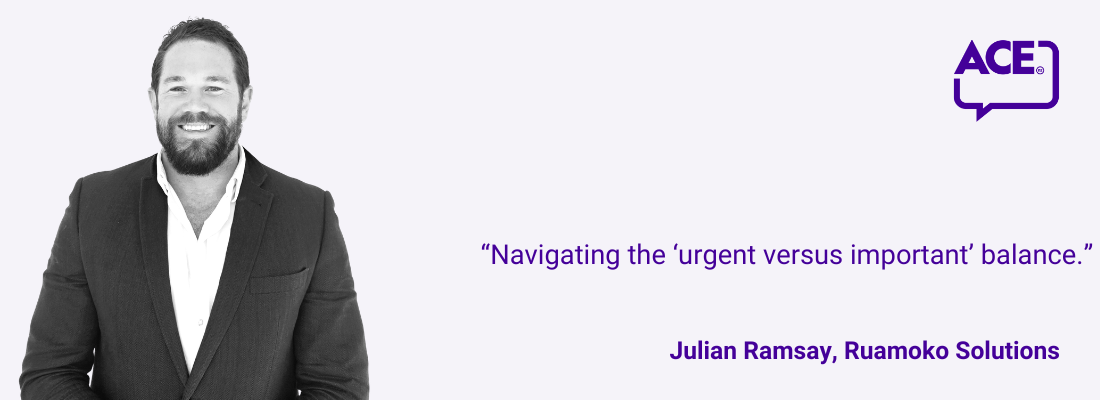
Navigating the ‘urgent versus important’ balance.
Cheaper options aren’t always the right ones, and the short-term urgency of preserving staff numbers and creating cost-effective buildings and infrastructure for an increasing population must be balanced against the less urgent but important challenges of global warming, sustainability and investment in resilient infrastructure for future generations. Otherwise the important will become the urgent sooner than planned, and the scale of the problem will be much harder to solve.
This has been highlighted recently where tougher economic times have seen the industry struggle, concurrent with natural events such as floods and extreme weather that have exposed the vulnerability of our aging infrastructure. Achieving this balance commercially isn’t easy for clients or consultants, particularly when facing other challenges, including heightened regulatory requirements; increased use of AI; changing seismic hazard design requirements; and an ever-changing workforce.
What are your hopes for the engineering and consulting sector in the next 12 months?
Engineers are problem-solvers and I am confident that the industry will see these challenges as opportunities. 2026 has started strongly with seemingly more confidence than last year and I hope this continues, making it easier for clients and consultants to achieve the right balance.
The rapid increase in AI usage and its ever-increasing potential will provide new ways of working. Hopefully this can be implemented in ways that complement staff upskilling and development, particularly younger staff.
Lastly, 25 per cent of Ruamoko Solutions’ work is now in the space and technology sector. Contributing $2.5 billion to the New Zealand economy, and 17,000 FTE jobs, this sector is growing rapidly. In my experience, the global market responds well to the Kiwi ‘can-do’ mindset. I hope more engineers leverage this to grow the sector further, leading to job creation, economic improvement and stabilisation, as well as the retention of smart minds that may otherwise leave the country. Internationally, the growth of this market helps technologies that contribute to solving some of the important longer-term global issues that are becoming increasingly difficult to ignore.
What do you see as the biggest challenge of 2026?
We have a few stacked challenges this year. The economy is not yet fully firing, which means we still face some pipeline uncertainty, and this is not helped by the current global geopolitical risks. We also have shifting regulatory goalposts (PC120 is a good example of this) and, at the same time, we need to deliver infrastructure at pace all while maintaining the quality and judgement that good engineering requires.
We also have artificial intelligence and advanced digital tools entering the engineering workplace. Integrating technologies in a way that strengthens engineering judgement, rather than replacing it, is going to be key.
What are your hopes for the engineering and consulting sector in the next 12 months?
The real strength of the profession will always be its people. Engineering is fundamentally a human discipline built on curiosity, experience and the willingness to ask difficult questions when something does not quite add up.
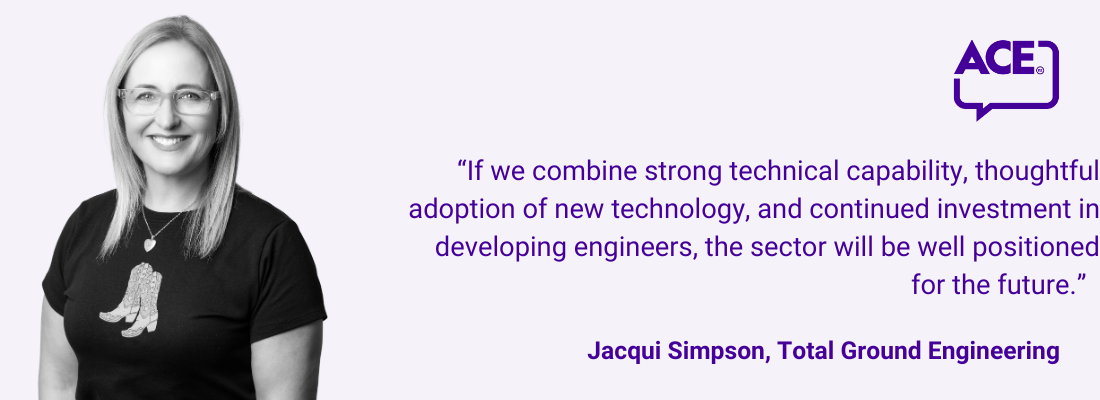
If we combine strong technical capability, thoughtful adoption of new technology and continued investment in developing engineers, the sector will be well positioned for the future.
What do you see as the biggest challenge of 2026?
According to the New Zealand Infrastructure Commission, New Zealand has an immense infrastructure pipeline to deliver in the next 10 years – more than $180 billion or, to put it simply, around $18b every year. This is across all infrastructure sectors including transport, water, social, digital and other economic infrastructure.
While there’s an immense pipeline of work, all these projects have a significant upfront design portion before any work can commence. This is about 10 per cent of the infrastructure estimate – $1.8b per year. Our biggest challenge is to get these projects into the design phase so that we can break ground, yet infrastructure design firms have struggled to retain their staff because of the slow release of these projects. The same applies for contracting businesses, who struggle to keep the lights on in expectation of the release of infrastructure funding.
One of our biggest challenges is to keep our valued workforce, on all sides of the supply chain, on our shores so that we’re able to deliver this mountain of work. The other big challenge is to deliver the pipeline on time if we are to stand a chance of not overrunning initial estimates.
What are your hopes for the engineering and consulting sector in the next 12 months?
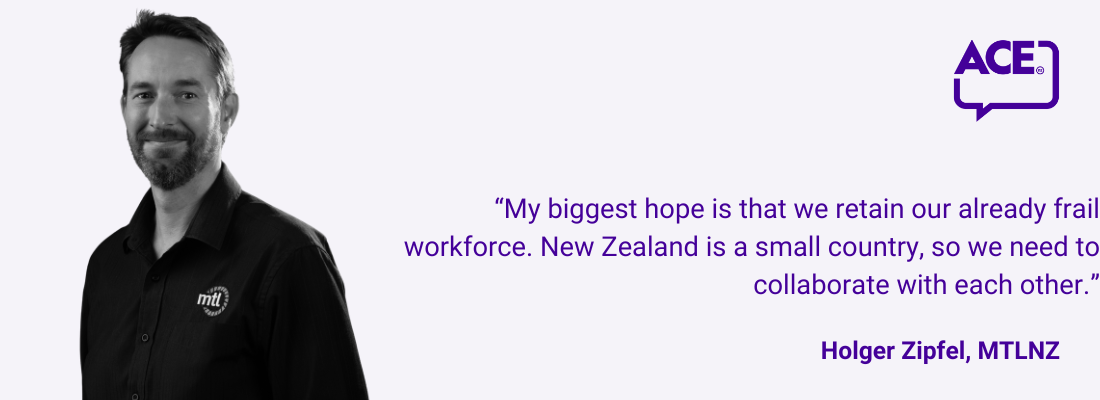
My biggest hope is that we retain our already frail workforce. New Zealand is a small country, so we need to collaborate with each other. While every firm needs to build and develop its own competitive advantage, we must acknowledge that collaboration enhances our competitive advantage on a national and international stage.
In turn, larger multinational firms should have a corporate responsibility not to dominate the market with low value offerings to increase their own market share at the expense of smaller firms.
What do you see as the biggest challenge of 2026?
2026 is emerging as a year marked by accelerated digital disruption. As digital transformation becomes embedded into the core strategy of most organisations, the biggest challenge will be navigating the widening gap between existing technology environments and the pace of AI‑driven change.
The rise in sophisticated cyber attacks and data breaches is adding new layers of risk. Organisations will need to contend with several pressures at once: integrating legacy systems with emerging AI tools, managing data governance, security and building confidence in digital processes across diverse teams.
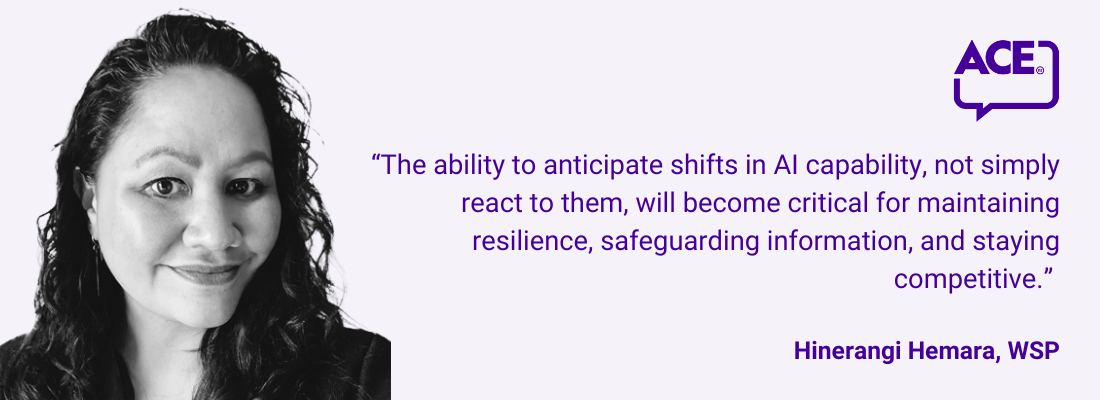
The ability to anticipate shifts in AI capability, not simply react to them, will become critical for maintaining resilience, safeguarding information and staying competitive.
What are your hopes for the engineering and consulting sector in the next 12 months?
I hope to see the engineering and consulting sector place a much stronger emphasis on digital literacy and the capability required to operate securely in an increasingly data‑driven environment. As our projects become more complex and our clients become digitally mature, it’s essential that our people understand not just the tools we use, but the principles that sit behind them.
As consultants, we have a responsibility to ensure that the digital solutions we propose are transparent, secure, culturally responsive and aligned with the values of the communities we serve here. This includes upholding data sovereignty, recognising Māori authority over how Māori data is collected, used, protected, and shared, and ensuring all data practices meet the highest standards.
My vision is digital transformation will become less about technology adoption and more about building confident, capable teams who can guide our clients through the challenges and opportunities ahead.
What do you see as the biggest challenge of 2026?
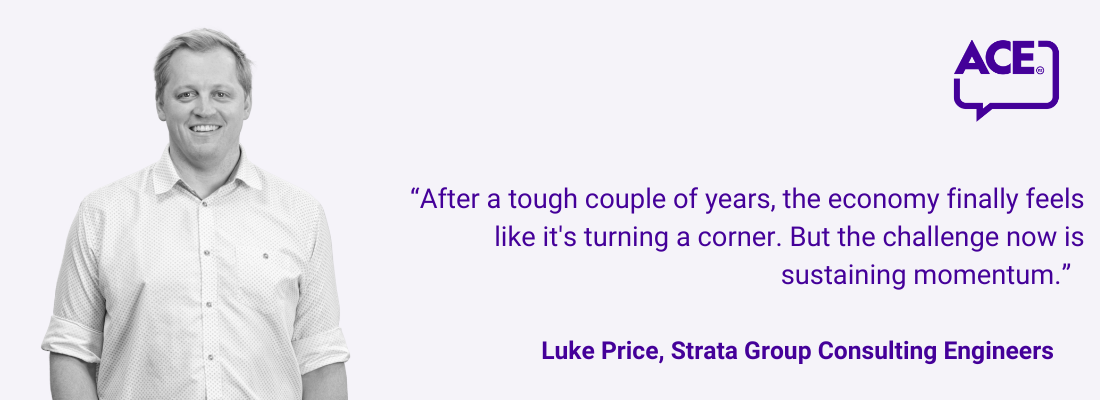
After a tough couple of years, the economy finally feels like it’s turning a corner. That’s really encouraging and I’m feeling pretty optimistic about the year to come. But the challenge now is sustaining momentum. With the talent market still tight and the pipeline of work looking like it will start to build, the sector needs to see continued confidence from both government and private investors to ensure the recovery has real legs, rather than fading into another false start.
What are your hopes for the engineering and consulting sector in the next 12 months?
With confidence slowly returning to the market, I hope we use this moment of renewed momentum to invest wisely in our people and in technology. AI has real potential to help us do more with the talent we have, but the opportunity goes beyond efficiency gains. If we get the balance right, we can emerge from this period as a stronger, more capable sector that’s genuinely well-positioned for the pipeline ahead.
What do you see as the biggest challenge of 2026?
Restoring momentum and rebuilding confidence after a prolonged period of uncertainty. A stop-start pipeline, deferred programmes, shifting priorities and constrained infrastructure investment have made it difficult for organisations to plan with conviction.
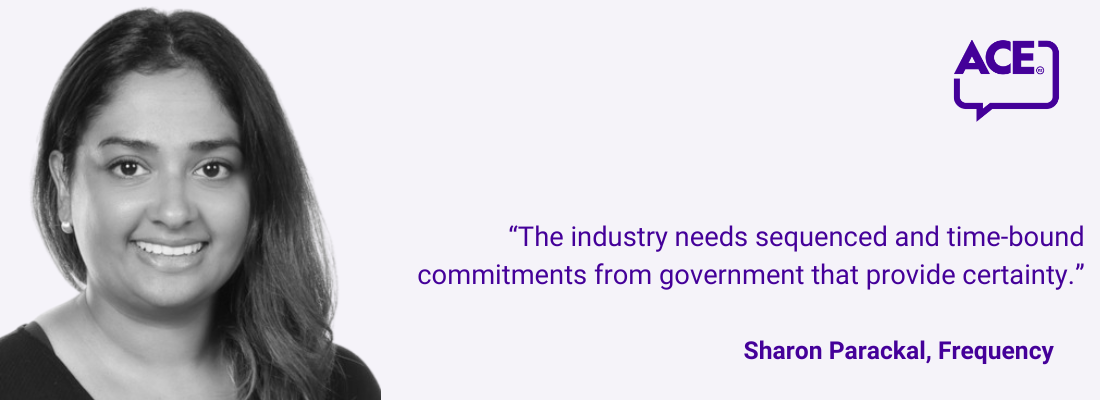
The industry needs sequenced and time-bound commitments from government that provide certainty. Confidence returns when the market can see a stable, transparent pathway forward and genuinely prepare — investing in capability, retaining talent and mobilising for delivery.
As momentum returns, there is opportunity for discipline to build a shared understanding of problems before defining solutions. This means being clear about where minimum viable outcomes deliver the best value for money and where targeted betterment is justified. This also requires honest conversations with clients about trade-offs, risk allocation and long-term consequences. For ACE New Zealand members, this is where leadership matters. We are often closest to the problem definition and bring practical insight into how infrastructure decisions play out in the real world. Our challenge is to work alongside clients to co-create effective decision-support tools, shared data environments and the capability required for a genuine New Zealand Inc systems-based approach to planning and delivery.
What are your hopes for the engineering and consulting sector in the next 12 months?
My long-term hope is for a bipartisan, evidence-based vision for New Zealand Inc that clearly articulates how reliable infrastructure growth underpins economic performance and community wellbeing for all Kiwis.
In the near term, I’d like to see the sector move beyond the stop-start narrative and rebuild confidence in infrastructure investment and delivery; balancing whole-of-system performance with practical delivery realities, supporting investment in people and digital tools and better decision-making across the full infrastructure lifecycle. This means making decisions that recognise social licence and culture in design, while bringing operability, construction and maintenance perspectives into how communities use infrastructure. Done well, this can only enhance community confidence while also strengthening the commercial resilience of our industry through greater certainty across programmes and smarter, more repeatable delivery models.
What do you see as the biggest challenge of 2026?
Political noise will always be part of the landscape, but I believe the real challenge is the continued move beyond consultation to true partnership. That means embedding mātauranga Māori, tikanga and establishing kawa that our respected firms can hold onto, even when things get tough. That challenge will always be making decisions with long-term, intergenerational thinking at the front of every move. Do this well, and we leave something that lasts, not just for today, but for generations to come.
What are your hopes for the engineering and consulting sector in the next 12 months?
I hope we see the sector striving for real partnership with iwi, hapū, ahi kā and mana whenua, embedding mātauranga Māori and tikanga at every stage, not just as a box in procurement, but as a framework that drives decisions.
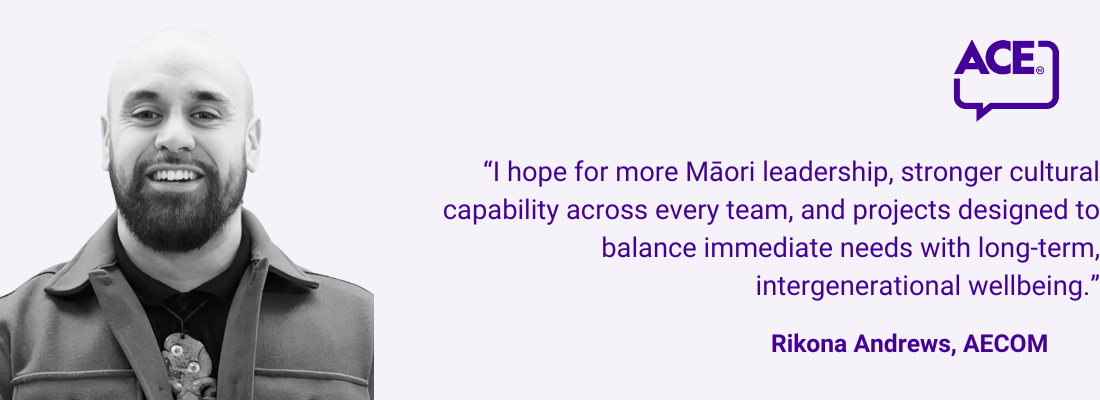
I hope for more Māori leadership, stronger cultural capability across every team and projects designed to balance immediate needs with long-term, intergenerational wellbeing. The goal is infrastructure that works for everyone today and for those who come after us.
What do you see as the biggest challenge of 2026?
The professional consulting industry faces a defining test of integrity. Economic pressure has tightened margins, strained staffing and forced a reassessment of priorities. The 2026 National Infrastructure Plan reflects these pressures, calling for efficient, long-term planning across a vast and largely unfunded pipeline.
Yet within this efficiency narrative lies a deeper challenge. When the economy contracts, environmental, cultural and people-focused initiatives are often the first to be compromised. At a time when climate change is intensifying extreme weather and damaging the infrastructure we design, deferring environmental responsibility feels less like prudence and more like avoidance.
Too often downturns push us toward short-term fixes rather than regenerative thinking. However, with artificial intelligence and advanced analytics now at our fingertips, we have unprecedented capability to examine past performance and design better futures. The challenge is not capability; it is whether we will treat measurable environmental outcomes as non-negotiable.
The same tension appears in how we treat our people. Progress made in diversity, equity and inclusion can feel fragile when financial pressure mounts. Diversity should not be treated as optional spending. It is a strategic advantage that improves how we solve complex problems.
What are your hopes for the engineering and consulting sector in the next 12 months?
Despite these challenges, I remain optimistic. The enduring strength of consulting has always been its diverse people and multidisciplinary teams united by purpose.
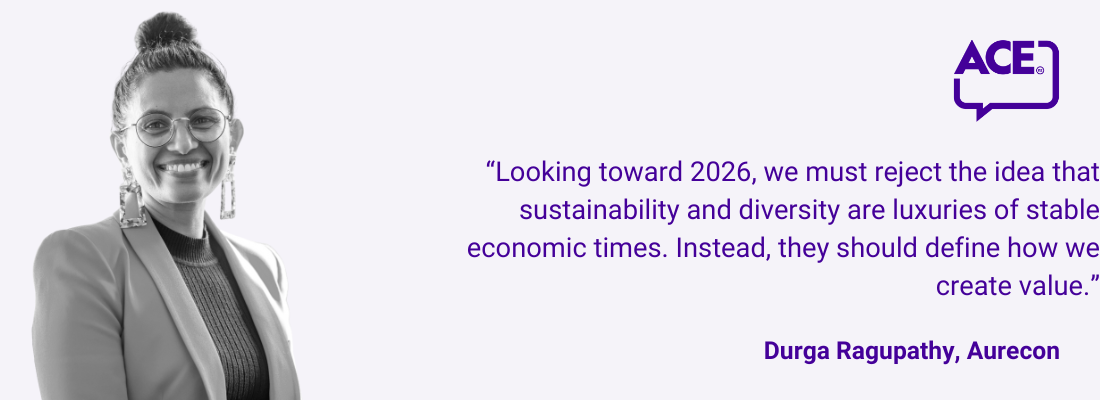
Looking toward 2026, we must reject the idea that sustainability and diversity are luxuries of stable economic times. Instead, they should define how we create value. Artificial intelligence can elevate our profession by automating routine analysis and unlocking insights from infrastructure data, freeing us to focus on systems thinking, climate adaptation, circular design and culturally responsive engagement.
Equally important is doubling down on inclusive leadership. There needs to be visible pathways, mentorship and reassurance that people and their values belong in this industry.
If we lead with stewardship rather than short-termism, 2026 can mark a turning point: where constraints sharpen ambition, technology amplifies human potential, and sustainability and inclusion become defining principles rather than optional extras.