For business leaders in consulting, the real challenge isn’t choosing between priorities – it’s managing the constant juggle between what needs attention right now and what will secure the future. In an industry where decisions shape communities and environments for generations, this balance is critical.
We talk to the speakers at our ACE New Zealand SME Summit in Auckland next month about how they’ll help you to navigate this tension with confidence and clarity, and leave equipped with practical tools and strategies.
‘Managing finances and cash flow in a tight market’
How will you equip leaders to confidently navigate the tension between immediate demands and long-term goals?
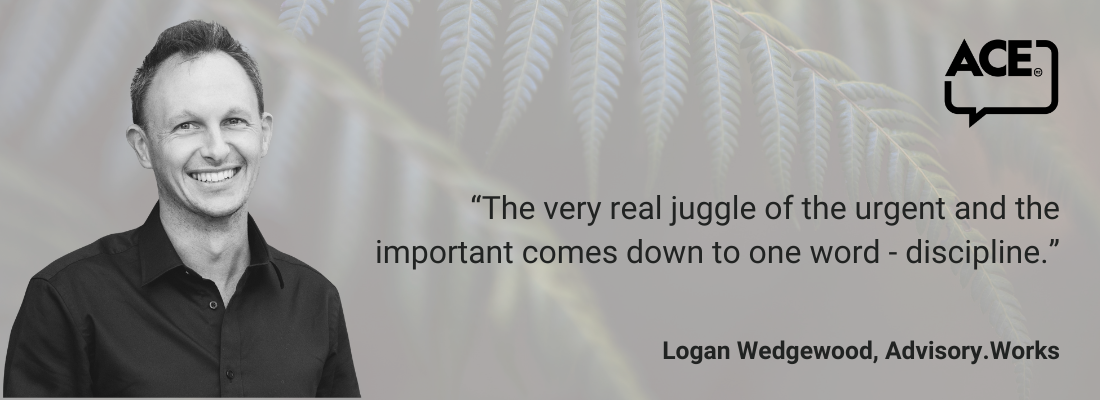
The very real juggle of the urgent and important comes down to one word – discipline.
I will teach some sales disciplines that enable short-term focus while keeping one eye on the long-term prize. Making things simpler creates confidence. The sales process framework that I will workshop with attendees will enable everyone to leave the room with their own way of selling that they can confidently implement right away.
What will be a key takeaway from your session?
- A reality check about selling
- An immediately applicable sales process
- An understanding of the activity numbers required to be successful
‘Principles for long-term client relationships’
How will you equip leaders to confidently navigate the tension between immediate demands and long-term goals?
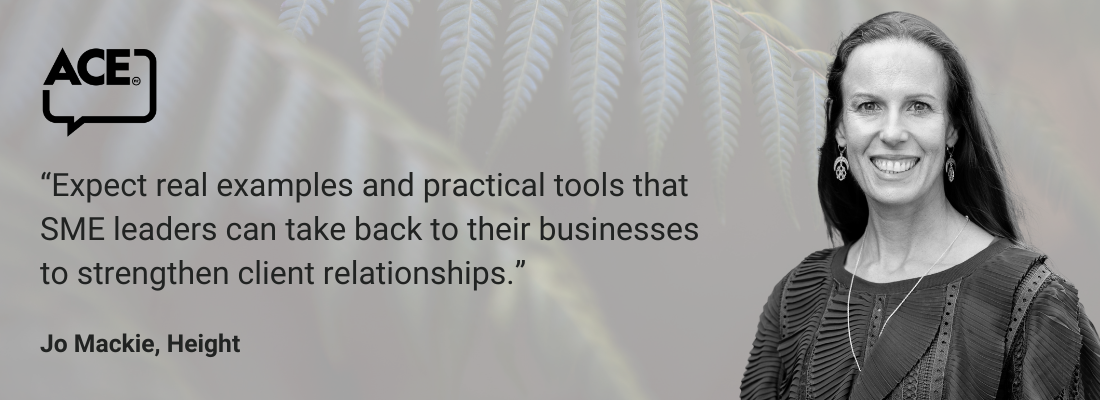
It’s a real tension, and there’s no silver bullet, but having a plan helps. We’ll be real and share what we do. Expect real examples and practical tools that SME leaders can take back to their businesses to strengthen client relationships.
What will be a key takeaway from your session?
You’ll get a few key takeaways. We’ll cover:
- Knowing your customer
- The difference between selling and storytelling
- How to do it – what communications channels and tools to use
- How to create a content plan and what to say
- What good looks like when things get busy
- How to measure trust
‘Smart scaling to grow sustainably’
How will you equip leaders to confidently navigate the tension between immediate demands and long-term goals?
The tension between today’s pressures and tomorrow’s ambitions is real, but in my experience, it’s often misdiagnosed. Most principals aren’t stuck because they lack vision. They’re stuck because their business depends too heavily on them personally to operate. Every urgent decision lands on their desk because there’s no system that handles it without them. That’s not a leadership problem. It’s an infrastructure problem.
In my session, I reframe scaling entirely. Growth doesn’t mean bigger. It means increasing what your firm can deliver without proportionally increasing your headcount, hours, or stress. Leaders who understand that distinction stop trying to solve capacity problems by hiring, and start solving them by building the operational infrastructure that frees them up to lead.
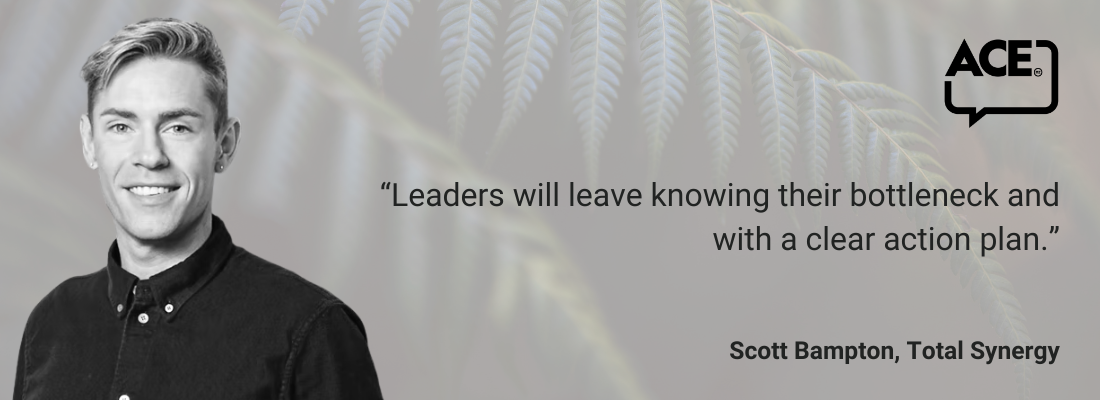
I’ll use a practical diagnostic to help each leader identify exactly where their firm is most constrained right now, and the tools and frameworks in the session are designed to address that specific constraint, not scaling in the abstract. Leaders leave knowing their bottleneck and with a clear action plan for the next two weeks.
What will be a key takeaway from your session?
The biggest myth in professional services growth is that building operational systems is a long, expensive internal project. It doesn’t have to be. One of the things I’ll explore is how AI has fundamentally changed the effort required to document and standardise how a firm operates. What used to take months can now happen in an afternoon. The firms that act on that first will compound the advantage for years, and I want every leader in the room to leave knowing exactly how to get started.
‘Restructure insurance for success’
How will you equip leaders to confidently navigate the tension between immediate demands and long-term goals?
We’ll simplify professional indemnity insurance by cutting through industry jargon and focusing on what really matters. We’ll explain key aspects of coverage, break down important terms, and share practical tips to help business owners better understand their policies and identify opportunities for improvement.
What will be a key takeaway from your session?
Participants will leave with a clearer understanding of professional indemnity insurance, along with handouts that explain coverage and key terms in plain English. They’ll also gain practical advice on what to look for when placing or renewing their insurances, so they can make more confident and informed decisions.
‘Embedding AI for practical impact’
How will you equip leaders to confidently navigate the tension between immediate demands and long-term goals?
Leaders do not need to choose between short-term delivery and long-term capability building. Done properly, they support each other. I’ll show how small, practical steps inside real work are what build confidence and momentum over time.
The session breaks AI adoption into four building blocks leaders can act on straight away: involve your people early, create space for safe experimentation, build AI into existing workflows, and put clear guardrails around use. This helps teams get quick wins now while building the habits and capability they’ll need as the technology keeps evolving.
What will be a key takeaway from your session?
Successful AI adoption is not mainly about the tool. It is mostly about people: how you lead, how you upskill, and whether your team feels safe to experiment. I’ll give attendees a practical prompt framework they can use immediately, alongside an engineering-based example showing how AI can reduce friction in repeated tasks. The goal is simple: leave with something useful you can try that same week.
‘Succession planning and building leadership for tomorrow’
How will you equip leaders to confidently navigate the tension between immediate demands and long-term goals?
In today’s fast-paced business environment, leaders often face the challenge of balancing immediate operational demands with the need to focus on long-term strategic goals. I will explore how tailored employee benefits can serve as a powerful tool to address this tension.
By aligning benefits programs with organisational objectives, leaders can foster a culture of wellbeing, engagement, and productivity that supports both short-term performance and long-term sustainability. I will provide actionable strategies to help leaders prioritise their people while meeting business goals, including leveraging data-driven insights to make informed decisions, implementing flexible benefits that adapt to changing workforce needs, and fostering open communication to ensure alignment across all levels of the organisation. These approaches empower leaders to confidently manage competing priorities while building a resilient and future-ready workforce.
What will be a key takeaway from your session?
The key takeaway will be the understanding that employee benefits are not just a cost but a strategic investment in your organisation’s success.
Attendees will leave with practical tools and insights to design and implement benefits programs that drive employee engagement, enhance organisational wellbeing, and ultimately contribute to business growth. By focusing on the holistic needs of employees – health, financial wellbeing, and career development – leaders can create a workplace environment that attracts and retains top talent, reduces turnover, and improves overall productivity.
This session will equip attendees with the knowledge to transform their approach to employee benefits, ensuring they are not only meeting immediate demands but also laying the foundation for long-term organisational success.
‘Talent retention and recruitment’
How will you equip leaders to confidently navigate the tension between immediate demands and long-term goals?
Are you listening? Continuous employee listening for smarter recruitment, stronger retention, and a secure future.
Engineering leaders are highly skilled at using data to guide technical and commercial decisions – yet when it comes to recruitment and retention, some are operating with limited insight. In environments where delivery pressures are immediate and HR support is stretched, this can result in costly hiring decisions, reduced productivity, and the loss of high-value talent.
This session equips leaders to confidently navigate the tension between short-term delivery and long-term capability by reframing employee listening as a practical source of real-time business intelligence. Participants will explore how to gather and apply insight at critical points across the employee lifecycle – from defining the right role before recruitment, to understanding what candidates truly value, to identifying what will retain their most important people.
By focusing on what employees are telling them in the “here and now”, leaders can make more informed decisions that not only address immediate workload demands, but also reduce turnover risk, improve team performance, and strengthen organisational capability over time. This is particularly important in small to mid-sized engineering firms, where every hiring decision and resignation has a direct commercial impact.
Attendees will leave this session with a set of practical, low-resource tools that can be immediately applied to improve recruitment and retention outcomes. These include the “willing and able” matrix, individual engagement questionnaires for one-on-one conversations, and simple techniques to better understand each team member’s drivers.
Leaders will leave with greater confidence to make people decisions that are both commercially sound and future focused.
What will be a key takeaway from your session?
Employee engagement happens one person at a time.
‘Managing client relationships through difficulties’
How will you equip leaders to confidently navigate the tension between immediate demands and long-term goals?
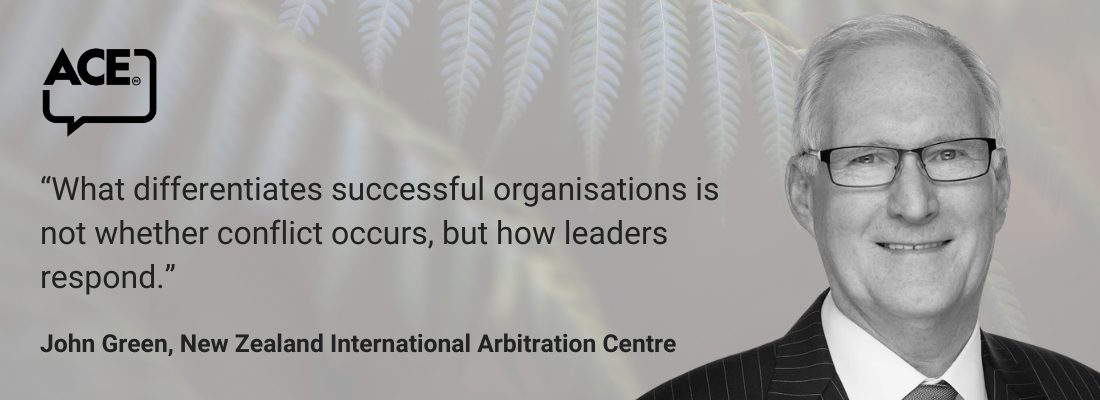
In complex engineering environments, conflict is not an exception – it is a predictable feature of delivery. Scope changes, design evolution, interface risk, schedule pressure, performance issues, and claims arise even in well‑managed projects. They are predictable moments where leadership judgement matters most. What differentiates successful organisations is not whether conflict occurs, but how leaders respond when immediate delivery, commercial, or contractual demands collide with long‑term relationship goals.
This session will equip leaders to manage client relationships through difficulty without defaulting to short‑term fixes that quietly erode long‑term value. Leaders will often be rewarded for fast resolutions, cost containment, or “winning” individual issues, even when those wins undermine trust, reputation, and future opportunity. The session will address this tension directly by providing leaders with structure and discipline when pressure is highest.
A central focus will be the distinction between managing a dispute and leading through a dispute. Managing a dispute will concentrate on process, entitlement, and outcome – contracts, claims, and resolution pathways. Leading through a dispute will require judgement: setting tone, controlling escalation, aligning internal teams, and maintaining credibility with clients and delivery partners while issues remain contested. Engineers are trained to solve problems; this session will focus on how leaders guide people and relationships while problems are contested and solutions debated.
What will be a key takeaway from your session?
Key takeaways will include a repeatable leadership decision model for balancing speed with long-term value; practical playbooks for issue identification, communication, and escalation; and a disciplined, staged, proportional, and relationship-aware approach to dispute resolution.
Participants will leave with practical, repeatable tools they can apply immediately, enabling confident leadership when relationships are tested, and the consequences of poor judgement are lasting.