Company: WSP 

Job title: Director of Property and Buildings 

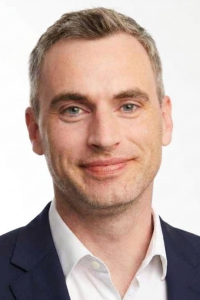
White male, smiling, headshot, suit.About Peter 

I’m the Director of Property and Buildings at WSP New Zealand, leading a national multidisciplinary business that delivers complex projects shaping communities across Aotearoa. A Chartered Structural Engineer, I bring more than 20 years’ experience built on technical excellence and people-focused leadership.  

Born and educated in Ireland, I began my career with one of Europe’s largest offsite construction firms, before moving to a global consultancy and later a specialist engineering practice. Working across organisations of different sizes, and in both consultancy and construction, has given me a broad perspective and a strong understanding of the industry’s needs.  

My wife and I moved to New Zealand in early 2012 for what was meant to be a two- to three-year stay, and 14 years later we now call it home. Since then, I’ve built a rewarding career through local, regional and global leadership roles. Alongside my current position, a standout opportunity was serving as Global Director for WSP Structures, where I worked with colleagues worldwide to help shape the future of a 3,500-strong structural engineering team. That experience strengthened my belief in the value of diverse perspectives, collaboration and long-term thinking to deliver better outcomes for clients and communities. 

Pepeha or whakapapa/family history   

Tēnā koutou katoa  

Ko Lackenakea te maunga Ko Lee te awa  

Ko O’Leary a Boyle te iwi  

Ko Buckley a McCarthy te tipuna No Cork ahau  

Ko Tāmaki Makaurau te kainga noho Kei WSP ahau e mahi ana  

He Nga Taonga Kaiwhakahaere me nga Whare ahau Ko Peter ahau  


In Irish 

Dia dhaoibh  

Is é Leacain Mhic Aodha mo shliabh Is é mo abhainn an Laoi  

Is é O’Laoire agus Ó Baoighill mo theaghlach  

Is é Ó Buachalla agus Mac Cárthaigh mo shinsear Is as Corcaigh mé  

Tá mé i mo chónaí i Tāmaki Makaurau anois Is é WSP an áit a n-oibrím  

Is Maoine agus Foirgnimh stiúrthóir mo phost Peadar is ainm dom  


The meaning of a pepeha resonates with me because it reflects your connection to home, especially when you live far from your roots. It also highlights the importance of native language. In the Irish version, I use the original place and family names, while the Te Reo version uses their anglicised forms. Many of the meanings in the Gaelic words do not fully carry into English, so sharing my pepeha in both languages gives me a meaningful way to honour and reflect on them. 

What strengths would you bring to the ACE Board?   

I would bring three key strengths to the ACE New Zealand Board.  

First, strategic sector leadership: as Director of Property and Buildings at WSP New Zealand, I lead a national multidisciplinary business spanning engineers, architects, project managers, property specialists and other advisory disciplines. I also work closely with clients, architects and contractors on key projects giving me a practical understanding of the breadth of firms represented by ACE New Zealand and of the issues ACE is well placed to influence, including procurement reform, pipeline volatility, productivity and capability.  

Second, I connect strategy to execution. Across leadership roles, I have translated strategy into action through leadership programmes, new delivery models and business improvement initiatives.  

Third, I offer collaborative, outward-looking leadership. Through work across New Zealand, Asia Pacific and global networks, I bring ideas on innovation, talent and emerging delivery models.  

Underpinning this is a values-driven governance mindset grounded in integrity. While my experience has been primarily in executive leadership rather than formal governance roles, it has required many of the same disciplines: strategic oversight, stewardship, transparent decision-making, balanced judgement and accountability for long-term outcomes. 

What is your strategic vision for ACE New Zealand? 

I want to help ACE New Zealand strengthen its leadership of a high-performing, collaborative and future-ready industry that creates enduring value for New Zealand.  

I believe ACE has a critical role in lifting performance across our industry by championing innovation, digital capability and smarter ways of working, particularly at a time when economic pressure is demanding greater efficiency and better outcomes. I also see further opportunity for ACE to help build stronger alignment between consultants, contractors, clients and government, because we deliver best when we work as partners rather than as separate parts of the value chain.  

A key part of that vision is improving how our sector uses data, so we can support better investment of capital, stronger decision-making and more effective long-term management of infrastructure and property. At the same time, ACE should continue to build on its leadership on the issues that will define our future, including low-carbon design, resilience, talent and capability. For me, ACE’s role is to help create a high-performing, future-ready industry that delivers enduring value for clients, communities and New Zealand as a whole.

What does diversity and inclusion mean to you? 

Personal perspective  

I grew up at a time when diversity or inclusion was not at the forefront of our culture. While that has changed significantly, the experience left me with a clear understanding of the harm a non-inclusive mindset can cause – whether at a community level or in everyday interactions. Everyone deserves to be treated with respect, regardless of background, and differing views should be heard with openness and fairness.  

The value of diversity and inclusion  

I also focus on the benefits I have seen from living and working in inclusive environments. Engaging with people across different cultures, genders, ages, thinking styles, professional backgrounds and lived experiences has enriched my life both personally and professionally. For me, inclusion means creating a culture where people feel safe, respected and empowered to contribute, and where every voice has the opportunity to influence decisions.  

Why it matters  

Ultimately, diversity and inclusion strengthen problem-solving, improve decision-making and lead to better outcomes for individuals, organisations and communities. If we want to serve our communities well, we need to listen to and understand the diverse perspectives within them. 

Leave a Reply

Your email address will not be published. Required fields are marked *

Hit enter to search or ESC to close